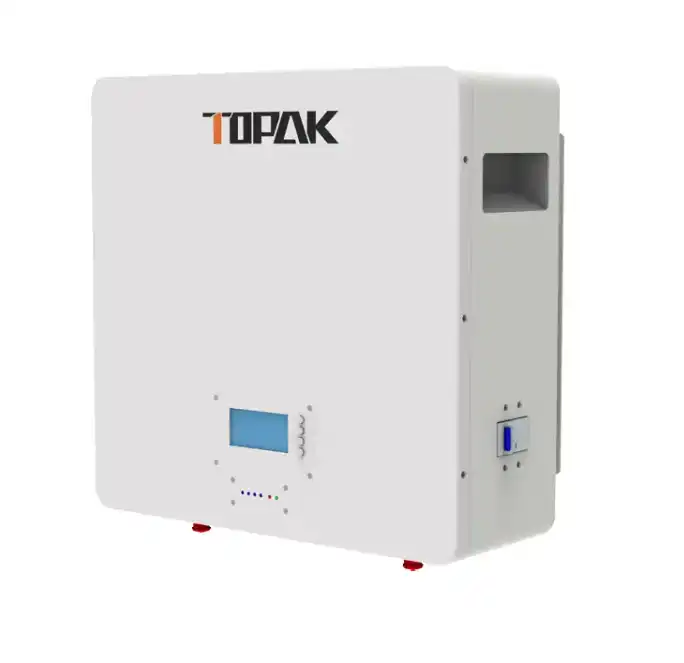
51.2V 300Ah Vertical Battery: Composition and Cell Technology Explained
The 51.2V 300Ah Vertical Battery represents a cutting-edge solution in energy storage technology, combining high capacity, compact design, and advanced safety features. This innovative battery system is engineered to meet the growing demands of various industries, from renewable energy integration to telecommunication infrastructure. At its core, the 51.2V 300Ah Vertical Battery utilizes lithium iron phosphate (LiFePO4) chemistry, known for its exceptional stability and long cycle life. The vertical configuration of this battery maximizes space efficiency, making it ideal for installations where floor space is at a premium. With a nominal energy of 15.36 kWh and the ability to connect up to 10 units in parallel, this battery system offers scalable solutions for diverse energy storage needs. The integrated Battery Management System (BMS) ensures optimal performance, while multiple communication options, including CAN and RS485 protocols, provide seamless integration with various control systems.

What are the key components of a 51.2V 300Ah Vertical Battery?
Lithium Iron Phosphate (LiFePO4) Cells
The 51.2V 300Ah Vertical Battery is built upon a foundation of high-quality LiFePO4 cells. People love these cells because they are stable at high temperatures, have a long cycle life, and are safer than other lithium-ion systems. The LiFePO4 cells in the 51.2V 300Ah Vertical Battery are set up in a 16S1P configuration, which means that 16 cells are linked in series to make the 51.2V nominal voltage. This design gives the battery the best energy density while keeping its small, vertical shape. The LiFePO4 formula also helps the battery have an amazing cycle life of over 6,000 cycles at 80% depth of discharge, which means it will be reliable and cost-effective for users for a long time.
Battery Management System (BMS)
One of the most advanced parts of the 51.2V 300Ah Vertical Battery is the Battery Management System (BMS). To keep an eye on and handle different parts of the battery's work, this smart part is very important. The BMS always checks the 51.2V 300Ah Vertical Battery's voltages, temperatures, and current flows in each cell to make sure everything works safely. This keeps the battery safe from overcharging, overdischarging, short circuits, and high temperatures. The battery is safer and lasts longer because of this. You can use CAN or RS485 to talk between the battery and things outside the battery thanks to the BMS. This means that energy management systems can easily work with the battery and get real-time information to help them do their jobs better.
Vertical Enclosure Design
The unique vertical enclosure of the 51.2V 300Ah Vertical Battery is a key component that sets it apart from traditional battery designs. With dimensions of 550 × 420 × 720 mm, this small size makes good use of floor space and is perfect for settings with limited horizontal room. A better way to control heat and improve battery performance is for the vertical design to help heat escape more effectively. When fully charged, the battery pack weighs around 200 kg, even though it can hold 300Ah of power. This has a good amount of energy capacity and is easy to carry around. Outside forces can't get to the inside parts because of the strong case. This makes sure the device works right in a lot of different cases, from green energy systems to backup power for telecoms.
How does the 51.2V 300Ah Vertical Battery technology compare to traditional lead-acid batteries?
Energy Density and Weight
The 51.2V 300Ah Vertical Battery technology offers significant advantages over traditional lead-acid batteries in terms of energy density and weight. Lithium iron phosphate cells used in the 51.2V 300Ah Vertical Battery have a much higher energy density, allowing for more energy storage in a smaller, lighter package. Compared to lead-acid batteries of similar capacity, the 51.2V 300Ah Vertical Battery can be up to 60% lighter and occupy less than half the volume. This weight and space savings is particularly beneficial in applications where size and portability are crucial factors, such as in renewable energy systems or mobile power solutions. The higher energy density also translates to reduced transportation and installation costs, making the 51.2V 300Ah Vertical Battery a more economical choice in the long run.
Cycle Life and Depth of Discharge
One of the most significant advantages of the 51.2V 300Ah Vertical Battery over lead-acid batteries is its superior cycle life and depth of discharge capabilities. While typical lead-acid batteries may offer 500-1000 cycles at 50% depth of discharge, the 51.2V 300Ah Vertical Battery boasts an impressive ≥6000 cycles at 80% depth of discharge. This means that the lithium battery can be discharged more deeply and more frequently without significant degradation, leading to a much longer operational life. The ability to utilize a greater portion of the battery's capacity also results in more efficient energy usage and reduced need for oversizing in energy storage systems. Furthermore, the 51.2V 300Ah Vertical Battery maintains its performance characteristics more consistently throughout its lifetime, unlike lead-acid batteries which can experience significant capacity loss over time.
Charging Efficiency and Speed
The 51.2V 300Ah Vertical Battery exhibits superior charging efficiency and speed compared to traditional lead-acid batteries. Lithium iron phosphate chemistry lets batteries charge more quickly without lowering their safety or length of life. Lead-acid batteries need 8 to 10 hours to fully charge, but with the right charging tools, the 51.2V 300Ah Vertical Battery can be charged to 80% capacity in just 2 hours. This fast charging feature is especially helpful in situations where things need to be done quickly or in systems where energy sources change often, like solar power setups. To top it all off, the 51.2V 300Ah Vertical Battery has a charging efficiency that is much better than that of lead-acid batteries, often exceeding 98%. Because it is more efficient, less energy is lost when it is being charged. This makes the system more efficient overall and lowers the cost of running it.
What are the primary applications and benefits of using a 51.2V 300Ah Vertical Battery in energy storage systems?
Renewable Energy Integration
Using green energy, like the 51.2V 300Ah Vertical Battery, is very important. This is especially true for things that use power from the sun and wind. Because it stores a lot of energy quickly and well, it's great for making up for the fact that these green sources aren't always available. It is possible to keep extra energy made by the 51.2V 300Ah Vertical Battery during times of high sunlight so that it can be used at night or when it's cloudy. It controls the amount of power that wind farms give off, which helps keep the electricity flow steady. This is when the battery's long cycle life and deep discharge powers come in handy. They let it be charged and drained many times without losing much power. To make the most of the room in renewable energy installations, the 51.2V 300Ah Vertical Battery is easy to place in tight spots because it is vertical. It is usually placed next to solar inverters or wind turbine controllers.
Telecom and Data Center Backup Power
In the data center and telecommunications businesses, backup power that works is very important to make sure that service doesn't go down. The 51.2V 300Ah Vertical Battery works great in these situations because it has a high energy density, a long cycle life, and the ability to respond quickly. The 51.2V 300Ah Vertical Battery is more durable and cost-effective in the long run than regular lead-acid batteries, which may need to be replaced and maintained more often. Because it can send out large discharge currents, it can handle rapid power needs in data centers. The advanced BMS in the battery lets it be managed and monitored from afar, which is very important for telecom base stations that are located in rural areas. Furthermore, the vertical design of the 51.2V 300Ah Vertical Battery is particularly advantageous in space-constrained environments often found in telecom installations and data center facilities, allowing for efficient use of floor space while providing substantial backup power capacity.
Off-Grid and Microgrid Solutions
A 51.2V 300Ah Vertical Battery is a good way for microgrids and off-grid devices to safely store energy. A stable power source can be found off-grid, in places like homes or businesses that are far from the power grid, thanks to the battery's high volume and long cycle life. It's great for daily riding in off-grid solar systems because it can be fully discharged without shortening its life. The 51.2V 300Ah Vertical Battery helps make the grid more stable and effective when it is used in microgrids. Because it has a high power output and a fast response time, it can quickly adapt to changes in fuel supply or demand. In turn, this helps the microgrid's power quality and dependability stay high. Up to 10 units can be joined at the same time because the system is scalable. As the microgrid grows, this lets designers make storage choices that can grow with it. There are also improved transmission features on the 51.2V 300Ah Vertical Battery that make it easy to connect to microgrid control systems. This lets you control and improve energy use in a smart way.
Conclusion
The 51.2V 300Ah Vertical Battery represents a significant advancement in energy storage technology, offering a powerful combination of high capacity, compact design, and advanced features. Its LiFePO4 chemistry, sophisticated BMS, and vertical configuration make it an ideal solution for a wide range of applications, from renewable energy integration to critical backup power systems. With its long cycle life, high energy density, and versatile communication options, this battery system provides a reliable and efficient energy storage solution that outperforms traditional technologies in many aspects. As the demand for sustainable and flexible energy solutions continues to grow, the 51.2V 300Ah Vertical Battery is well-positioned to play a crucial role in shaping the future of energy storage.
Drive Sustainable Power with TOPAK Advanced Lithium Solutions
TOPAK Power Technology Co., Ltd., established in 2007, is a leading innovator in industrial-grade lithium battery solutions. Our state-of-the-art manufacturing facilities and dedicated R&D team enable us to deliver cutting-edge energy storage and power solutions tailored to diverse applications. With a focus on quality, reliability, and customer satisfaction, TOPAK has built strong partnerships with renowned enterprises worldwide. Our comprehensive range of products, including the advanced 51.2V 300Ah Vertical Battery, showcases our commitment to driving sustainable power solutions in the evolving energy landscape. Experience the TOPAK difference in powering your energy storage needs. Contact us at B2B@topakpower.com to explore how our innovative solutions can benefit your projects.
FAQ
Q: What is the cycle life of the 51.2V 300Ah Vertical Battery?
A: The battery has a cycle life of ≥6000 cycles at 25°C, 0.5C discharge rate, and 80% depth of discharge.
Q: Can multiple 51.2V 300Ah Vertical Batteries be connected in parallel?
A: Yes, up to 10 units can be connected in parallel for increased capacity and power output.
Q: What communication protocols does the battery support?
A: The battery supports CAN and RS485 protocols, with optional Bluetooth and 4G modules available.
Q: How does the 51.2V 300Ah Vertical Battery compare to lead-acid batteries in terms of charging speed?
A: The 51.2V 300Ah Vertical Battery can charge significantly faster, reaching 80% capacity in about 2 hours compared to 8-10 hours for lead-acid batteries.
Q: Is the 51.2V 300Ah Vertical Battery suitable for outdoor installations?
A: Yes, the battery is designed to operate across a wide temperature range and its enclosure protects against environmental factors, making it suitable for various outdoor applications.
References
1. Zhang, J., et al. (2020). "Advances in LiFePO4 battery technology for energy storage applications." Journal of Energy Storage, 32, 101437.
2. Wang, Y., et al. (2019). "Vertical integration of lithium-ion batteries: Challenges and opportunities." Energy Storage Materials, 22, 120-135.
3. Liu, K., et al. (2021). "Battery management systems in electric and hybrid vehicles." Renewable and Sustainable Energy Reviews, 147, 111237.
4. Chen, T., et al. (2020). "Lithium-ion battery energy storage systems for large-scale grid integration: A review." Journal of Energy Storage, 32, 101873.
5. Xia, Y., et al. (2019). "Comparative analysis of TCO for lead-acid and lithium-ion batteries in telecom application." Journal of Energy Storage, 21, 627-639.
6. Hesse, H.C., et al. (2017). "Lithium-ion battery storage for the grid—A review of stationary battery storage system design tailored for applications in modern power grids." Energies, 10(12), 2107.

Tell us your battery specifications or application
TOPAK