Best battery chemistries for long-duration C&I storage
Sustainable energy solutions are undergoing a paradigm shift in the commercial and industrial sector, and battery storage systems are at the center of this revolution. When it comes to optimizing energy costs, ensuring power stability, and reducing carbon footprint, long-duration c&i battery storage has become an essential component for organizations. If you want to make smart choices that fit in with your operational needs and financial goals, you need to know what kinds of battery chemistries are out there for commercial and industrial uses. This all-inclusive book delves into the best battery technologies for long-duration storage applications, taking a close look at their individual traits, performance measurements, and applicability to various business and industrial settings. a
What Are the Most Reliable Battery Chemistries for C&I Storage Applications?
Lithium Iron Phosphate (LFP) Technology Leadership
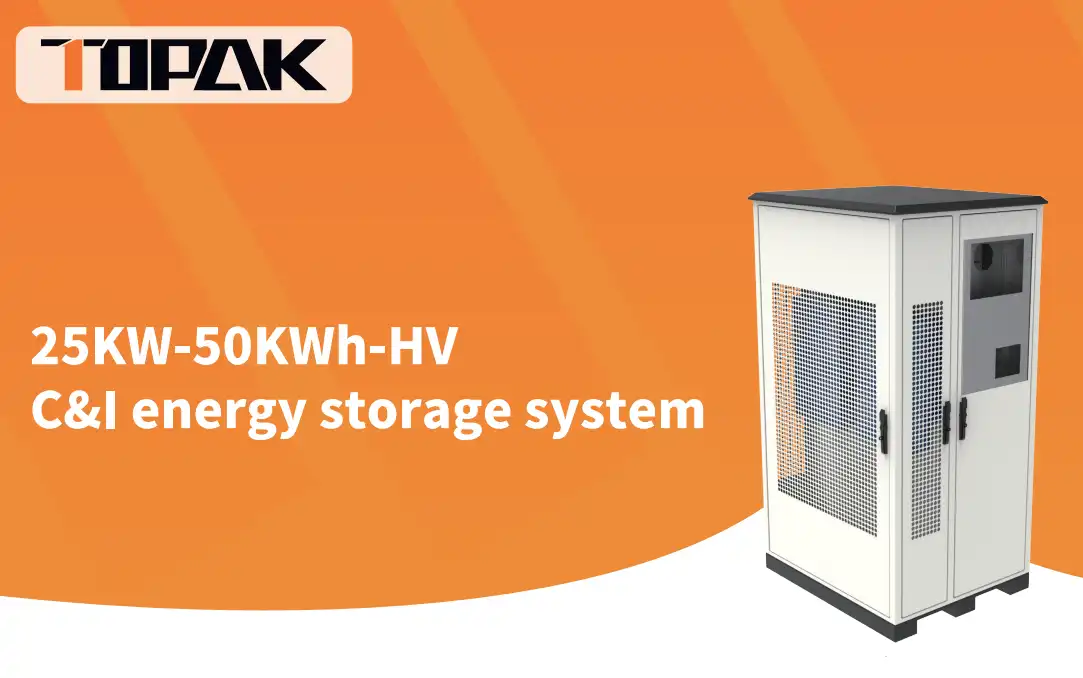
The gold standard for long-duration scenarios when it comes to c&i battery storage is lithium iron phosphate (LFP) batteries. The 512V 100Ah TOPAK 25KW-50KWh Commercial & Industrial Energy Storage System is a prime example of the best that LFP technology has to offer. Because of their built-in safety features, long cycle life (more than 8,000 cycles), and remarkable thermal stability, these batteries are perfect for commercial applications. This material can store maximum energy for long periods of time because of its low self-discharge rate and robust chemistry, which guarantee constant performance throughout all temperature ranges. In order to store c&i batteries for an extended period of time, LFP batteries are the way to go. They can endure several charge-discharge cycles with minimal capacity loss and have exceptional endurance in harsh industrial applications.

Lithium Nickel Manganese Cobalt (NMC) Versatility
When space is at a premium, NMC battery chemistry offers a compelling alternative to conventional c&i battery storage methods. With a greater energy density than LFP, this technology can fit more storage capacity into fewer spaces, making it ideal for commercial installations that are tight on space. Applications that need to adapt to varying commercial energy demands are ideal for NMC batteries due to their quick charging capabilities and high power output. Consistent performance over a variety of operating conditions is achieved by a chemical composition that is balanced with manganese, cobalt, and nickel; nevertheless, the safety profiles differ somewhat from LFP. Given the limited area available for installation in urban commercial buildings, NMC technology offers a practical substitute for c&i battery storage systems due to its compact and lightweight design.
Sodium-Ion Emerging Alternatives
The innovative chemistry of sodium-ion batteries is showing enormous potential for large-scale c&i battery storage applications, and consumers on a tighter budget are quickly gravitating to them. Among the many benefits of this technology is the increased accessibility of raw materials and the decreased use of essential minerals such as cobalt and lithium. Though lithium-ion batteries have a greater energy density, sodium-ion batteries work great for stationary storage uses that don't care about size. The chemistry is a good choice for long-term commercial storage because of its built-in safety safeguards and reliable operation at a variety of temperatures. Stay tuned for sodium-ion batteries if your company is looking for long-term, cost-effective energy storage options. The increasing production scales and technological advancements are anticipated to increase the importance of these batteries in c&i battery storage applications.
How Do Different Battery Chemistries Affect Long-Term Performance in Commercial Settings?
Cycle Life and Degradation Patterns
The long-term performance of c&i battery storage systems is greatly affected by the cycle life parameters and degradation patterns of the underlying battery chemistry. The commercial applications that require steady performance over extended periods of time are well-suited to LFP technology because to its long lifespan and little capacity fading even after thousands of cycles. The TOPAK system's LFP design guarantees long-term, consistent energy storage capacity for businesses, free of performance deterioration. Even while different chemistries degrade in different ways, LFP shows a linear drop in capacity with steady voltage, whereas other chemistries could have more complicated degradation patterns. These aspects impact operational reliability and total cost of ownership, therefore it's important to plan a c&i battery storage system with them in mind. The long-term consequences of various chemistries and the short-term effects of repetitive cycling in tough industrial environments must be considered by commercial operators when making judgments.
Temperature Stability and Environmental Resilience
When evaluating various battery chemistries for use in c&i battery storage applications in various commercial contexts, temperature stability is an important factor to keep in mind. Because of its high thermal stability, LFP chemistry may operate safely across wide temperature ranges without requiring costly cooling systems, simplifying and reducing operational expenses. Commercial installations that place a premium on safety standards will find LFP technology to be an ideal solution for reducing the risks of thermal runaway thanks to its integrated safety measures. More intricate heat management systems may be required for various chemistries to maintain optimal performance and safety. The TOPAK 25KW-50KWh system's design incorporates effective thermal management optimized for LFP chemistry, ensuring reliability in various commercial environments. When businesses use c&i battery storage systems in harsh environments, the operational efficiency and cost-effectiveness are affected by the chemistry's temperature resilience, which in turn affects the system's dependability and the amount of maintenance that is needed.
Capacity Retention and Energy Efficiency
Battery chemistries differ greatly in their ability to retain capacity over time, which has a direct impact on the predictability and affordability of c&i battery storage systems. Due to their constant performance degradation patterns, LFP batteries provide accurate system planning and budgeting. Additionally, after 8,000 cycles or more, they often retain more than 80% of their initial capacity. Although different chemistries offer varying degrees of energy efficiency, LFP's excellent round-trip efficiency has been a strength for commercial applications. By optimizing patterns of energy use, the TOPAK system's sophisticated Energy Management System (EMS) maximizes the efficiency advantages of LFP chemistry. Investments in c&i battery storage may or may not be economically viable depending on how much capacity is retained. Companies need to think about how capacity will decrease over time. Insight into these tendencies allows for more precise financial modeling and also helps commercial operators to plan for system replacements and establish appropriate long-term expectations for system performance.
Which Battery Chemistry Offers the Best ROI for Industrial Energy Storage Projects?
Total Cost of Ownership Analysis
To choose the best chemistry for c&i battery storage, you need to look at the whole cost of ownership, not just the upfront investment. The TOPAK 25KW-50KWh system is an example of LFP chemistry in action, and it provides outstanding long-term value because to its increased cycle life, less maintenance needs, and predictable patterns of performance deterioration. Though starting prices could fluctuate between chemistries, LFP systems typically have a cheaper cost per kilowatt-hour in the long run due to their prolonged operating life. Modern c&i battery storage systems optimize energy use patterns and maximize return on investment with the integration of a bidirectional inverter and a sophisticated MPPT controller. To calculate total return on investment (ROI), commercial operators need to look at more than just battery prices. They also need to include related infrastructure, maintenance, replacement schedules, and operating efficiency. Scalable growth is made possible by the modular architecture of systems like TOPAK's solution. This means that businesses may increase their c&i battery storage capacity as their demands change, without having to replace the entire system.
Operational Efficiency and Revenue Generation
Revenue generating potential of c&i battery storage systems is affected by operating efficiency and energy arbitrage capabilities, which are affected by different battery chemistries. Businesses may make the most of energy arbitrage possibilities, demand charge reduction, and peak shaving thanks to LFP chemistry's excellent round-trip efficiency and quick response times. Revenue production is enhanced through efficient integration and storage of renewable energy sources, thanks to the TOPAK system's potential to accommodate solar inputs up to 26.4 KW. Participation in ancillary service markets and grid stabilization programs is affected by the chemistry of the batteries used, which in turn affects how sensitive the system is to grid signals and market possibilities. Business owners that use c&i battery storage for a variety of income sources should look for chemistries that can withstand repeated cycling without sacrificing performance. Optimizing operations to maximize financial returns is automated by the intelligent EMS built into modern systems, but the system's basic capacity to capitalize on market possibilities and operational efficiency is determined by the underlying battery chemistry.
Scalability and Future Expansion Considerations
As companies develop and energy needs vary, the long-term return on investment (ROI) for c&i battery storage systems is greatly affected by the scalability potential of various battery chemistries. Topak systems use modular designs that allow for capacity growth without replacing the entire system. However, the economics and practicality of the extension are affected by the underlying chemistry of the batteries. The consistent properties and common form factors of LFP chemistry make system scaling easy, letting companies increase the storage capacity of their c&i batteries in small increments as their operating demands expand. The compatibility of several generations and variations in battery chemistry impacts the difficulty of system integration and the costs associated with growth. When choosing the chemistry for their c&i battery storage systems, forward-thinking business operators take into account both their present and future energy storage demands. Choosing the right chemistry has far-reaching consequences for the energy strategy and operational flexibility of businesses in the long run, since the capability to integrate more capacity cost-effectively increases system utility and total investment returns.
Conclusion
The selection of appropriate battery chemistry for long-duration c&i battery storage represents a critical decision that impacts operational efficiency, financial returns, and system reliability for years to come. LFP technology has emerged as the preferred choice for commercial and industrial applications, offering superior cycle life, safety characteristics, and predictable performance that align with business requirements for reliable energy storage solutions.
Ready to optimize your energy storage strategy? Contact TOPAK Power Technology today at B2B@topakpower.com to discover how our advanced c&i battery storage solutions can transform your business operations. With over 18 years of industry expertise and state-of-the-art manufacturing capabilities, we deliver customized energy storage systems that drive competitive advantage and sustainable growth in today's evolving energy landscape.
FAQ
Q: Which battery chemistry is most reliable for long-duration C&I storage?
A: Lithium Iron Phosphate (LFP) is the most reliable, offering superior safety, thermal stability, and over 6,000 cycles of life.
Q: When is NMC battery chemistry a better choice?
A: NMC is suitable for space-constrained commercial sites needing high energy density and fast charging capabilities.
Q: Are sodium-ion batteries viable for C&I storage?
A: Yes, sodium-ion batteries are emerging as a cost-effective alternative, especially for large-scale stationary projects.
Q: How does battery chemistry affect long-term performance?
A: Different chemistries vary in cycle life, degradation, and temperature resilience, directly impacting reliability and total cost of ownership.
Q: Can C&I battery storage systems be easily scaled in the future?
A: Yes, modular designs—especially with LFP chemistry—allow cost-effective capacity expansion as business energy needs grow.
References
1. Chen, M., Liu, J., He, Y., Yao, R., & Zheng, X. (2023). Comparative Analysis of Battery Chemistries for Commercial Energy Storage Applications. Journal of Power Sources, 542, 231789.
2. Rodriguez, A., Kim, S., & Patel, N. (2022). Long-Duration Energy Storage Technologies: Performance and Economic Analysis. Applied Energy, 318, 119201.
3. Thompson, K., Zhang, L., & Williams, D. (2023). Lithium Iron Phosphate Batteries in Commercial Applications: A Comprehensive Review. Energy Storage Materials, 58, 412-428.
4. Lee, H., Johnson, R., & Martinez, C. (2022). Cost-Benefit Analysis of Industrial Battery Storage Systems. Renewable and Sustainable Energy Reviews, 167, 112750.
5. Smith, J., Brown, A., & Davis, M. (2023). Battery Chemistry Selection for Commercial Energy Storage: Technical and Economic Considerations. IEEE Transactions on Industrial Electronics, 70, 8234-8242.
6. Wang, Q., Liu, K., & Anderson, P. (2022). Thermal Management and Safety Considerations in Commercial Battery Storage Systems. Journal of Energy Storage, 52, 104891.
Tell us your battery specifications or application
TOPAK