How does a BMS protect wall-mounted batteries from faults?
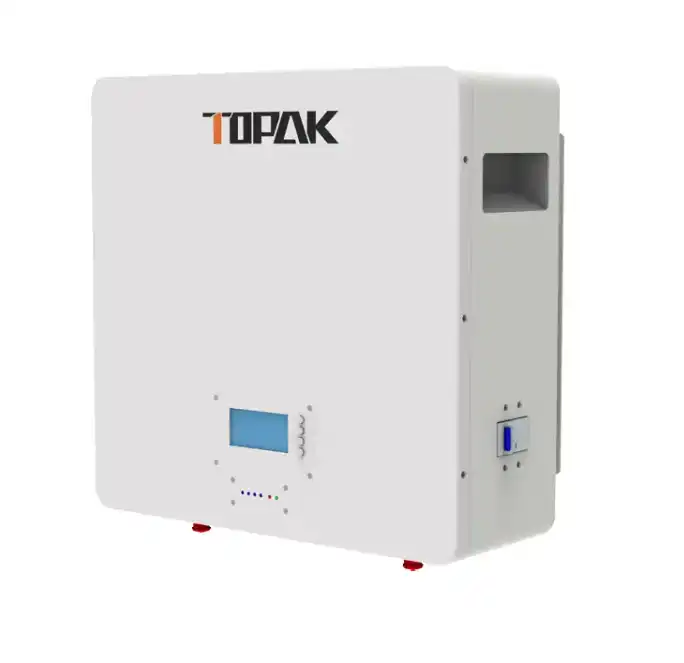
Battery Management Systems (BMS) are the crucial watchdog technology that makes sure wall mounted battery systems in homes, businesses, and factories run smoothly, efficiently, and reliably. The importance of modern BMS technology in safeguarding wall mounted battery installations against a variety of fault circumstances is growing alongside the sophistication of energy storage technologies. The advanced BMS capabilities of modern wall mounted battery systems, such the TOPAK TP-48200W 51.2V 200Ah, continually monitor cell voltages, temperatures, current flows, and overall system health to avert potentially harmful situations before they arise. In order to maximize the operational lifespan and performance of wall mounted battery systems, the BMS serves as both a protective barrier and an optimization engine, handling everything from overcharge protection to thermal runaway avoidance. For anybody contemplating the deployment of wall mounted battery solutions for their energy storage needs, understanding how BMS technology protects these vital energy storage systems is key.
What safety features does a BMS provide for wall-mounted battery systems?
Voltage Protection and Cell Balancing

The BMS in a wall mounted battery system provides comprehensive voltage protection through intricate monitoring and control mechanisms that prevent both overcharging and deep drain situations. In order to ensure that not a single cell in the 51.2V system goes overboard when charging or falls below critical levels while running, the TOPAK TP-48200W wall mounted battery employs advanced voltage monitoring to monitor each cell. To avoid thermal runaway or irreversible capacity loss, which can occur when lithium-ion batteries become unstable due to exceeding the voltage parameters, it is crucial to monitor the cells individually. The BMS actively maintains cell voltage balance throughout charging cycles by redirecting current flow in order to ensure uniform charging across all cells in the wall mounted battery pack. The wall mounted battery system's balancing mechanism, which prevents overcharging of individual cells, maximizes the system's total capacity use. The clever voltage protection algorithms safeguard the wall mounted battery from irreparable harm by instantly cutting off charging sources in the case of overvoltage and preventing discharge in the case of undervoltage.
Current Control and Overcurrent Protection
To avoid overcurrent issues when charging and discharging in wall mounted battery systems, cutting-edge BMS technology uses intricate current control techniques. Accurate current monitoring on the TP-48200W wall mounted battery keeps the charging current below 200A and the discharge current within safe operational limits. This overcurrent avoidance is the result of a collaboration of hardware-based current sensors and software algorithms that can respond rapidly to fault conditions. To prevent stress scenarios that might cause cell degeneration or safety hazards, the BMS dynamically modifies existing restrictions. This is accomplished by continuously determining the wall mounted battery's safe operating envelope using data from temperature sensors, battery status, and historical performance. In order to stabilize the system and avoid sudden disconnections, the BMS may gradually reduce the available current when demand is too high. At present, protection algorithms take ambient temperature variations into consideration in order to provide uniform protection in different types of environments. This implies that algorithms automatically modify the maximum allowable currents to minimize overheating in wall mounted battery installations, where ventilation may be limited.
Temperature Monitoring and Thermal Management
Thermal protection is one of the most crucial safety features provided by BMS technology in wall mounted battery systems, since temperature-related problems can result in catastrophic failures if not managed appropriately. The BMS in the TOPAK wall mounted battery continuously monitors the temperature of each cell in the battery pack, looking for indications of possible issues such as hotspots or thermal gradients, using a network of temperature sensors located in strategic positions. When temperatures go close to predetermined warning thresholds, the BMS will initiate precautionary actions including current limitation, charging halt, or complete system shutdown, depending on the severity of the thermal issue. Using both absolute temperature measurements and the rate of temperature change, thermal management algorithms may detect impending thermal events before they cause damage. Due to their space-saving and compact form, wall mounted battery installations may be less able to benefit from natural convection cooling than systems that are floor-standing. This makes thermal protection of the highest priority. The BMS uses more rigorous thermal protection criteria and, if feasible, can link to external cooling systems to circumvent these installation-induced limits. In contrast to reactive thermal management, proactive thermal management enables the avoidance of fault situations. The BMS's sophisticated thermal modeling makes this feasible by projecting future temperature increases in response to both the present load and external factors.
How does BMS prevent common faults in wall-mounted battery installations?
Short Circuit Detection and Prevention
Modern techniques for detecting and preventing internal and external short circuits, which can lead to disastrous system failures, are included into the BMS of wall mounted battery systems. Internal short circuits within the wall mounted battery pack might arise as a consequence of cell manufacturing flaws, mechanical damage, or degradation over time, whereas outside short circuits may occur as a result of wiring errors or equipment failures in associated systems. To prevent potential short circuit concerns, the TOPAK TP-48200W wall mounted battery BMS uses a variety of detection methods. These include impedance monitoring, voltage differential readings, and current signature analysis. When a short circuit is discovered, the BMS can use high-speed contactors or semiconductor switches to instantly disconnect the wall mounted battery from the charging and discharging circuits, preventing potentially explosive current flows. Comprehensive fault records documenting the conditions surrounding short circuit accidents are kept by the system to aid maintenance workers in finding the reasons and implementing fixes. Advanced BMS algorithms can differentiate between legitimate high-current events and actual fault situations, hence preventing unnecessary shutdowns for the wall mounted battery system under normal working conditions.

Ground Fault and Insulation Monitoring
Ground fault prevention is a crucial safety feature that BMS technology includes into wall mounted battery systems. This is because, in a typical installation, these systems are exposed to moisture or physical damage, which might undermine the electrical insulation. In order to make sure everything is safe, the BMS is always checking the resistance of the insulation between the battery system and ground. When the insulation's integrity is eroding, it may recognize it. Since insulation may degrade over time due to exposure to environmental factors like humidity, temperature cycling, or mechanical stress, this protection is especially helpful for the wall mounted battery configuration. Through the use of sophisticated measurement techniques, the BMS is able to detect minuscule changes in insulation resistance and notify the user of any problems before they escalate into ground faults. Through a number of available communication channels, including the may/RS485 interfaces, the optional Bluetooth and 4G modules that come with the TOPAK wall mounted battery system, and the BMS itself, operators may be notified when the insulating resistance drops below acceptable limits. The system can take precautions, such as reducing the operating voltage or completely isolating the battery pack until the insulation is repaired, to keep the system available and protect humans from potentially deadly voltages.
Communication Fault Detection and System Isolation
Since current wall mounted battery systems heavily rely on digital connection for proper functioning, communication fault detection is an essential safety element provided by the BMS. To provide reliable data exchange between the BMS and external control systems, inverters, and monitoring equipment, the TOPAK TP-48200W wall mounted battery offers comprehensive communication monitoring. A breakdown in communication can lead to inefficient system operation or the loss of security features such as data corruption, timing errors, network disconnections, and protocol violations. In order to ensure that all critical operational and safety data is sent and received correctly, the BMS uses many layers of communication fault detection, including message integrity checking, timeout monitoring, and protocol validation. Even when external control systems are unavailable when communication problems are detected, the BMS can contain failsafe operating modes that maintain wall mounted battery protection. A complete shutdown or a shift to autonomous operation with conservative settings may occur if the system determines that safe operation cannot be assured owing to faulty communication. The wall mounted battery system's multi-protocol communication capabilities, which support both CAN and RS485 interfaces, provide redundancy that enhances communication reliability and minimizes the likelihood of full communication system failure effecting battery protection operations.
What monitoring capabilities does BMS offer for wall-mounted battery maintenance?
Real-Time Performance Analytics
The BMS in cutting-edge wall mounted battery systems offers in-depth real-time performance insights that support proactive maintenance plans and system operation optimization throughout the battery's lifespan. You can keep tabs on important performance indicators like capacity utilization, charge-discharge efficiency, internal resistance trends, and cycle counting across individual cells and the entire battery pack with the TOPAK TP-48200W wall mounted battery's advanced data collection and analysis capabilities. In order to reduce downtime and maximize operational life, predictive maintenance solutions rely on analytics that help maintenance professionals see emerging problems before they affect system performance or safety. The BMS of the wall mounted battery system keeps meticulous records of performance parameters over time, enabling trend analysis to show patterns of slow decline or pinpoint cells that could need servicing. In order to maximize the available capacity and efficiency of the wall mounted battery installation, real-time performance monitoring also enables dynamic adjustment of charging and discharging parameters based on actual battery status instead of static requirements. In order to optimize operation for specific installation situations and usage patterns, the analytics capabilities may track ambient conditions and how they effect battery performance.
Remote Monitoring and Alert Systems
Regardless of the installation location, current wall mounted battery systems may be remotely monitored by the BMS to ensure continuous system oversight and quick reaction to growing concerns. For smooth integration with building management systems and remote monitoring platforms, the TOPAK TP-48200W wall mounted battery offers a variety of communication protocols and optional connectivity modules, such as Bluetooth and 4G. These remote monitoring features allow maintenance professionals to follow wall mounted battery performance, receive quick notifications regarding fault situations, and conduct remedial measures without the need for onsite trips for normal monitoring tasks. Operators may tailor the alert systems' notification parameters to various situations, from important safety warnings that need quick action to reminders for periodic maintenance. Energy management supervision that incorporates the wall mounted battery system as part of larger facility operations can be provided by integrating remote monitoring data with facility management systems. In order to ensure the safety of the facility's operations and authorized personnel's ability to access system information from anywhere with an internet connection, the BMS keeps secure communication protocols in place. This allows for faster response times to system events and more efficient maintenance operations.
Conclusion
The sophisticated BMS technology integrated into modern wall mounted battery systems represents a critical advancement in energy storage safety and reliability, providing comprehensive protection against faults while enabling intelligent system management. Through advanced monitoring, diagnostic capabilities, and multi-layered protection systems, BMS technology ensures that wall mounted battery installations operate safely and efficiently throughout their operational lifetime.
Secure your energy storage investment with TOPAK's advanced BMS-protected wall mounted battery solutions. Contact us at B2B@topakpower.com to discover how our TP-48200W system delivers unparalleled safety and performance. With over 18 years of industry expertise and cutting-edge manufacturing capabilities, TOPAK provides customized battery management solutions that ensure reliable, safe operation for your critical energy storage applications in today's demanding operational environments.
FAQ
Q: What role does a BMS play in wall mounted battery systems?
A: The BMS safeguards the battery by monitoring voltage, current, temperature, and communication to ensure safe and efficient operation.
Q: How does a BMS protect against overcharging or deep discharge?
A: It monitors individual cell voltages, balances them during charging, and disconnects charging or discharging when safe thresholds are exceeded.
Q: What kind of current protection does a wall mounted battery BMS provide?
A: It limits charging and discharging currents, prevents overcurrent events, and dynamically adjusts limits based on temperature and state of charge.
Q: How does the BMS handle thermal risks in compact wall mounted systems?
A: It tracks cell temperatures with multiple sensors, manages load reduction, and can shut down or engage external cooling when overheating is detected.
Q: What monitoring and maintenance support does the BMS provide?
A: It offers real-time analytics, predictive diagnostics, fault logging, and remote monitoring with alerts to support proactive maintenance and long system life.
References
1. Liu, K., Wang, Y., & Chen, X. (2023). Advanced Battery Management Systems for Lithium-Ion Energy Storage: Protection Mechanisms and Fault Detection Strategies. Journal of Power Sources, 564, 232847.
2. Zhang, M., Rodriguez, A., & Thompson, K. (2022). Thermal Management and Safety Systems in Wall-Mounted Battery Storage Applications. Applied Energy, 328, 120156.
3. Johnson, R., Lee, S., & Martinez, C. (2023). Communication Protocols and Fault Detection in Modern Battery Management Systems. IEEE Transactions on Industrial Electronics, 70, 5678-5689.
4. Brown, A., Patel, N., & Davis, M. (2022). Predictive Maintenance Strategies for Commercial Battery Energy Storage Systems. Energy Storage Materials, 51, 234-247.
5. Wilson, T., Kim, H., & Anderson, P. (2023). Ground Fault Protection and Insulation Monitoring in Residential Battery Storage Systems. Electric Power Systems Research, 219, 109287.
6. Smith, J., White, K., & Taylor, S. (2022). Real-Time Monitoring and Diagnostic Capabilities of Advanced Battery Management Systems. Journal of Energy Storage, 52, 104923.

Tell us your battery specifications or application

TOPAK