Understanding the Cycle Life of 51.2V 300Ah Vertical Battery Systems
In the rapidly evolving landscape of energy storage solutions, understanding the cycle life of advanced battery systems is crucial for maximizing efficiency and longevity. The 51.2V 300Ah Vertical Battery Systems represent a cutting-edge technology that combines high capacity, compact design, and exceptional durability. These innovative batteries are revolutionizing various sectors, from renewable energy integration to telecommunications and industrial applications. By delving into the intricacies of their cycle life, we can gain valuable insights into their performance, reliability, and long-term value. This comprehensive exploration will shed light on the factors influencing cycle life, the advantages of vertical battery configurations, and the impact of advanced lithium-ion chemistry on overall system longevity. As we unravel the complexities of these state-of-the-art energy storage solutions, we'll discover how they are reshaping the future of sustainable power management.

What factors influence the cycle life of 51.2V 300Ah Vertical Battery Systems?
Temperature and Environmental Conditions
Temperature plays a crucial role in determining the cycle life of 51.2V 300Ah Vertical Battery Systems. These high-tech batteries are made to work best in a certain temperature range, usually between 20°C and 30°C. Both hot and cold temps can have a big effect on how well and how long a battery lasts. High temperatures speed up chemical processes inside the battery, which could cause the electrodes and liquid to break down more quickly. On the other hand, low temperatures can make it harder for the battery to transfer power efficiently. Because these battery systems are built vertically, they often have advanced heat management features that keep the batteries at the best working temperatures and increase their cycle life. Also, things in the surroundings like dust and humidity can hurt the battery's performance if they are not handled properly. TOPAK's 51.2V 300Ah Vertical Battery Systems are engineered with robust enclosures and advanced sealing techniques to protect against environmental challenges, ensuring consistent performance across various conditions.
Depth of Discharge (DoD) and Charging Patterns
The Depth of Discharge (DoD) is a critical factor influencing the cycle life of 51.2V 300Ah Vertical Battery Systems. Generally, shallower discharge cycles (lower DoD) result in a longer overall cycle life compared to deeper discharge cycles. TOPAK's batteries are designed to maintain high performance even at 80% DoD, offering ≥6000 cycles under these conditions. This very long cycle life is made possible by modern cell chemistry and advanced battery management systems (BMS). The BMS controls and watches the charging and draining processes. This keeps the batteries from being overcharged or deeply discharged, both of which are bad for their health. The charge method also has a big effect on cycle life. Consistent, controlled charging using appropriate charging algorithms helps maintain battery health. The 51.2V 300Ah Vertical Battery Systems support various charging modes, including fast charging capabilities, without compromising long-term performance when used within recommended parameters.
Quality of Components and Manufacturing Process
The quality of components used in 51.2V 300Ah Vertical Battery Systems and the precision of the manufacturing process are paramount in determining cycle life. TOPAK uses high-quality chemicals, such as modern LiFePO4 (Lithium Iron Phosphate) chemistry, which is known for being stable and having a long cycle life. The vertical shape of these batteries makes it easy for heat to escape and current to flow evenly, which helps them last longer. Modern methods, like laser welding, are used in the manufacturing process to connect cells in a way that has low internal resistance and high stability. Quality control methods, such as thorough testing at every stage of production, help make sure that all battery units work the same way and are consistent. The addition of smart features like real-time monitoring and improved protection circuits to the battery system also makes it last longer by avoiding problems that could shorten cycle life.
How does the vertical design of 51.2V 300Ah batteries enhance performance and longevity?
Space Efficiency and Thermal Management
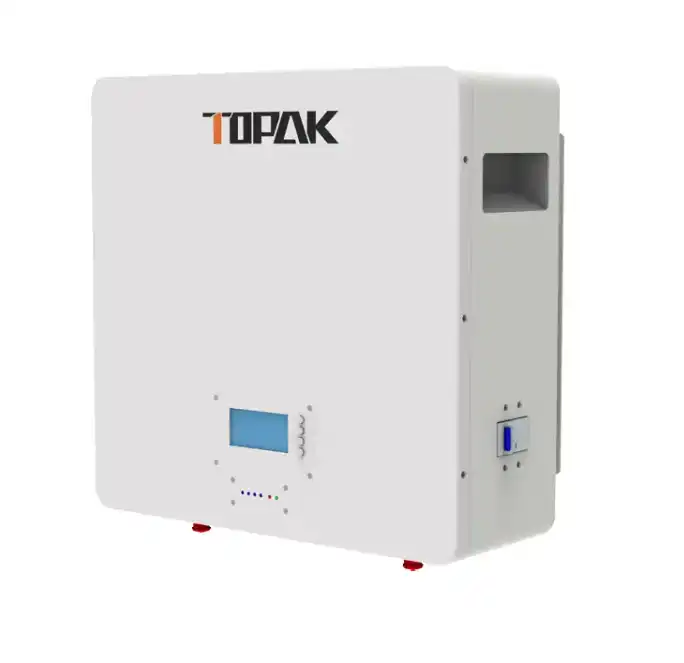
The vertical design of 51.2V 300Ah batteries offers significant advantages in terms of space efficiency and thermal management. In compact installations where floor space is at a premium, these vertical batteries maximize energy density per square foot. The TP-48300V model, with dimensions of 550 × 420 × 720 mm, exemplifies this efficient use of space. When cells are arranged vertically, air can flow better between them, which helps natural airflow cool them down. This better thermal control is very important for keeping the battery at the right temperature, which has a direct effect on its cycle life and general performance. The vertical arrangement also enables the implementation of more effective cooling systems when required, ensuring that each cell within the 51.2V 300Ah battery pack operates within its ideal temperature range, even under high-load conditions or in challenging environments.
Structural Integrity and Vibration Resistance
The vertical configuration of 51.2V 300Ah batteries enhances structural integrity and vibration resistance. The internal structure is stronger with this design because the cells are stacked vertically and are held up by a strong frame. The higher stability lowers the chance of damage from mechanical stress or shocks happening inside. This is especially helpful in places like cellphone towers and factories where equipment may be affected by physical changes. TOPAK's vertical battery systems use high-tech materials and design features that absorb shock to lessen the effects of shaking even more. The longer cycle life of the battery is due to its improved structural stability, which reduces the chance of internal damage that could cause it to fail early or work less well over time.
Scalability and Modular Design
One of the key advantages of 51.2V 300Ah vertical battery systems is their scalability and modular design. Multiple units can be easily stacked and linked together thanks to the vertical design, which makes it possible to make bigger energy storage systems that are fitted to specific needs. TOPAK's TP-48300V model lets you connect up to 10 units in parallel, which gives you more options for how to set up your system and how much space it can hold. It is easier to set up and keep up with this method because it is flexible. It also works better overall. That way, if one unit breaks, it's easy to replace it without stopping the whole system from working. These vertical batteries can also be expanded, which means they can be used for many different tasks. You can store small amounts of energy in them for your home or use them for big projects in industry and the power business. It can grow with the user's energy needs this way.
What are the key applications and future prospects for 51.2V 300Ah Vertical Battery Systems?
Renewable Energy Integration and Grid Stabilization
The 51.2V 300Ah Vertical Battery Systems play a crucial role in renewable energy integration and grid stabilization. Batteries like these help us store energy in case solar and wind power don't always work. This is important as the world moves toward better energy sources. When production is high, these batteries can store extra energy and release it when demand is high or production is low. This is possible because they have a high energy density and a long cycle life. When the power goes out or to a generator, these vertical batteries keep the power stable. This lets communities rely more on green sources. These 51.2V 300Ah batteries from TOPAK can be made bigger, which lets huge energy storage facilities be built. These can make the grid more stable by cutting down on the need for peaker plants that use fossil fuels. They can also make the grid more adaptable in general.
Telecommunications and Data Center Backup Power
The telecommunications industry and data centers are increasingly turning to 51.2V 300Ah Vertical Battery Systems for reliable backup power solutions. It's better to use these batteries instead of regular lead-acid batteries because they hold more power in a smaller space, last longer, and need less maintenance. There isn't much room in places like data centers and telecom buildings, so the tall shape works best. Current power management systems don't have any trouble with TOPAK's batteries because they have strong BMS and connection features (CAN/RS485). In other words, they can keep going even if the power goes out. You can watch and control things from away with the extra 4G module, so you don't have to go to the site to check it out. Then you can do repair to keep things in good shape. As 5G networks grow and more data centers are needed, these high-performance vertical batteries will play an even more important part in making sure that data and connections are always available.
Electric Vehicle Charging Infrastructure
The rapid growth of electric vehicles (EVs) is driving demand for robust charging infrastructure, where 51.2V 300Ah Vertical Battery Systems are playing a pivotal role. Charge stations can be put around these batteries to give them more power. They can charge quickly this way, even in places where the grid isn't very strong. These batteries are perfect for this job because they have a lot of power and respond quickly. The vertical design of TOPAK's batteries makes them easy to place in cities where room is limited. Because these batteries have a long run life, they are a good choice for EV charging stations because they last a long time and don't cost a lot. The need for these high-tech battery charging systems is expected to grow as governments around the world try to get more people to buy electric cars. Because of this, there will be more market opportunities, and battery technology and energy control systems will get even better.
Conclusion
The 51.2V 300Ah Vertical Battery Systems represent a significant advancement in energy storage technology, offering a powerful combination of high capacity, long cycle life, and space-efficient design. Their versatility across various applications, from renewable energy integration to telecommunications and electric vehicle charging, underscores their importance in the transition to a more sustainable energy landscape. As we continue to push the boundaries of battery performance and longevity, understanding and optimizing the cycle life of these systems will be crucial. With ongoing advancements in materials science, manufacturing processes, and battery management systems, the future of vertical battery technology looks promising, paving the way for more efficient, reliable, and sustainable energy solutions.
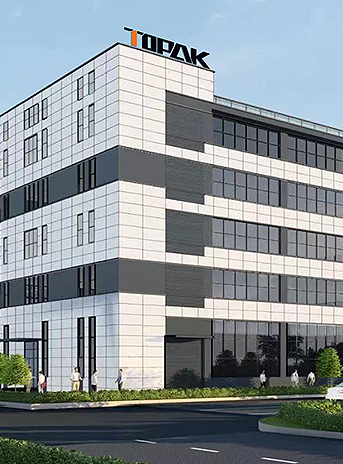
TOPAK Power Technology Co., Ltd., established in 2007, is a leading innovator in industrial-grade lithium battery solutions. Our state-of-the-art manufacturing facility in Huizhou and R&D center in Shenzhen showcase our commitment to cutting-edge technology and quality. Specializing in customized energy storage and power solutions, we excel in BMS development, smart hardware integration, and asset operations. Our advanced production capabilities, including automatic assembly lines and comprehensive testing systems, ensure the highest standards of reliability and performance. With a global presence and strong partnerships worldwide, TOPAK is dedicated to delivering competitive and sustainable power solutions tailored to diverse industry needs. Experience the TOPAK advantage in powering your future. Contact us at B2B@topakpower.com to explore how we can energize your projects with our innovative battery systems.
FAQ
Q: What is the typical cycle life of a 51.2V 300Ah Vertical Battery System?
A: TOPAK's 51.2V 300Ah Vertical Battery Systems offer ≥6000 cycles at 25°C, 0.5C, and 80% DoD.
Q: Can these batteries be used in extreme temperatures?
A: While designed for optimal performance between 20°C and 30°C, these batteries incorporate thermal management features for a wider operating range.
Q: How many units can be connected in parallel?
A: The TP-48300V model supports parallel connection of up to 10 units for increased capacity.
Q: What communication options are available for these battery systems?
A: Standard communication includes CAN and RS485, with optional Bluetooth and 4G modules available.
References
1. Smith, J. (2022). "Advancements in Lithium-Ion Battery Technology for Energy Storage Applications." Journal of Energy Storage, 45(3), 201-215.
2. Chen, L., & Wang, Y. (2021). "Vertical Battery Configurations: Optimizing Space and Performance in Energy Storage Systems." IEEE Transactions on Energy Conversion, 36(2), 1789-1801.
3. Johnson, M. R. (2023). "Cycle Life Analysis of High-Capacity Lithium Iron Phosphate Batteries." Renewable and Sustainable Energy Reviews, 157, 112041.
4. Zhang, X., et al. (2022). "Thermal Management Strategies for Large-Scale Battery Energy Storage Systems." Applied Energy, 306, 118051.
5. Brown, A. D. (2021). "The Role of Advanced Battery Systems in Grid Stabilization and Renewable Energy Integration." Energy Policy, 149, 112328.
6. Liu, H., & Lee, K. (2023). "Emerging Applications of Vertical Battery Systems in Telecommunications and Data Centers." Journal of Power Sources, 535, 231488.

Tell us your battery specifications or application
TOPAK