How to size battery BMS and disconnects for a 51.2V 100Ah Wall-mounted Battery?
When it comes to designing an efficient and reliable energy storage system, proper sizing of the Battery Management System (BMS) and disconnects for a 51.2V 100Ah Wall-mounted Battery is crucial. This process involves careful consideration of various factors to ensure optimal performance, safety, and longevity of the battery system. The BMS plays a vital role in monitoring and controlling the battery's state, while disconnects provide essential safety features. In this comprehensive guide, we'll explore the key aspects of sizing these components for a 51.2V 100Ah Wall-mounted Battery, taking into account factors such as voltage, current ratings, temperature management, and safety requirements. By understanding these elements, you'll be better equipped to design a robust and efficient energy storage solution that meets your specific needs and complies with industry standards.

What are the key considerations for sizing a BMS for a 51.2V 100Ah Wall-mounted Battery?
Voltage and Current Ratings
When sizing a BMS for a 51.2V 100Ah Wall-mounted Battery, one of the primary considerations is ensuring that the voltage and current ratings of the BMS match or exceed those of the battery. The BMS should be capable of handling the 51.2V nominal voltage and the maximum charge and discharge currents of the battery, which in this case is 100A for both. Selecting a BMS capable of easily controlling these parameters is crucial for avoiding overloading and maximizing efficiency. Additionally, the BMS should be able to monitor individual cell voltages within the battery pack, typically ranging from 2.5V to 3.65V per cell for lithium-ion batteries, to maintain balance and prevent over-charging or over-discharging.
Temperature Management
Temperature management is another crucial aspect of sizing a BMS for a 51.2V 100Ah Wall-mounted Battery. The BMS should be equipped with temperature sensors capable of monitoring both the ambient temperature and the internal temperature of the battery pack. Because they may be subjected to different climatic conditions, this is especially crucial for batteries that are installed on the wall. Within the battery's designated temperature range—usually anything from -20°C to 60°C—the BMS should function properly. In order to prevent the battery from being damaged or overcharged due to high temperatures, it should also be able to employ charge and discharge control mechanisms that are dependent on temperature.
Communication and Integration
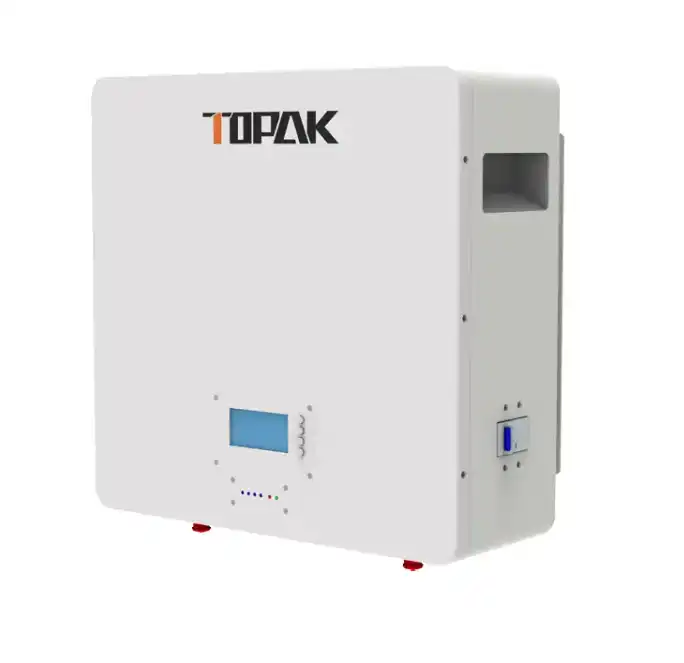
When sizing a BMS for a 51.2V 100Ah Wall-mounted Battery, it's important to consider the communication capabilities and integration options. The BMS should support common communication protocols such as CAN or RS485, which are used in the TOPAK TP-48100W model. This paves the way for remote control and monitoring as well as smooth interaction with other parts of the system. To cater to a variety of installation needs, the BMS should also be compatible with add-on modules such as Bluetooth and 4G. The total performance and usability of the wall-mounted battery system may be substantially improved by simply integrating the BMS with preexisting energy management systems or smart home platforms.
How do you determine the appropriate disconnect size for a 51.2V 100Ah Wall-mounted Battery?
Current Rating and Safety Factor
When determining the appropriate disconnect size for a 51.2V 100Ah Wall-mounted Battery, the primary consideration is the current rating. The disconnect should be sized to handle the maximum current that the battery can produce or consume, which in this case is 100A for both charging and discharging. However, it's generally recommended to include a safety factor to account for potential short-term current spikes or future system expansions. A common practice is to size the disconnect at 125% of the maximum current, which would result in a 125A rating for this battery. This ensures that the disconnect can safely interrupt the circuit under all operating conditions without risking damage or failure.
Voltage Rating and Insulation
The voltage rating of the disconnect is another crucial factor when sizing for a 51.2V 100Ah Wall-mounted Battery. The disconnect must be rated for a voltage equal to or greater than the maximum voltage of the battery system. In this case, while the nominal voltage is 51.2V, the maximum voltage could be higher, potentially up to 58.8V when fully charged. Therefore, it's advisable to choose a disconnect with a voltage rating of at least 60V DC to ensure safe operation. Additionally, the insulation of the disconnect should be suitable for the environmental conditions where the wall-mounted battery will be installed, considering factors such as humidity, temperature, and potential exposure to elements.
Type and Features of Disconnect
When selecting a disconnect for a 51.2V 100Ah Wall-mounted Battery, it's important to consider the type and features that best suit the application. For this type of battery system, a DC-rated circuit breaker or a heavy-duty switch disconnector would be appropriate. The disconnect should have a quick-break mechanism to rapidly interrupt the current flow and prevent arcing. It's also beneficial to choose a disconnect with auxiliary contacts that can be integrated with the BMS for monitoring and control purposes. Some advanced disconnects may include features such as remote operation capabilities or built-in overcurrent protection, which can enhance the overall safety and functionality of the wall-mounted battery system.
What are the best practices for installing and maintaining a BMS and disconnects for a 51.2V 100Ah Wall-mounted Battery?
Proper Installation Techniques
When installing a BMS and disconnects for a 51.2V 100Ah Wall-mounted Battery, proper techniques are crucial for ensuring optimal performance and safety. Mounting the BMS in a way that prevents physical damage and environmental conditions while still allowing simple access for maintenance and troubleshooting is essential. The cables and their connections must be able to manage a current of no less than 100A. Overheating and arcing can occur due to loose contacts, so be sure to tighten all connections thoroughly. In order to facilitate rapid manual disconnection in the event of an emergency, the disconnects should be placed in conveniently accessible areas, usually close to the battery. To ensure a safe and compliant installation, it is vital to mark components correctly and follow local electrical rules.
Regular Maintenance and Inspections
A 51.2V 100Ah wall-mounted battery system's dependability and safety over the long run depend on regular inspections and maintenance. At regular intervals, you should examine the BMS to make sure it's running well and that all of the protection and monitoring features are functioning as they should. Checking the alarm systems, double-checking the recorded data, and ensuring effective communication between all system components may all be required steps in this procedure. In addition to routinely testing the disconnects' mechanical performance, you should look for indications of wear, corrosion, or heat damage. Also, make sure there isn't any dust or debris lying around the wall-mounted battery; that might interfere with the cooling or even cause a fire. If you want your battery system to last as long as possible and work as well as possible, you must adhere to the maintenance plan and techniques suggested by the manufacturer.
Firmware Updates and System Optimization
51.2V 100Ah wall-mounted battery systems must have their software updated and optimized on a regular basis to keep running at peak performance. To make sure the most recent features, bug fixes, and security updates are applied, it is important to keep the BMS firmware updated. As part of this process, it may be necessary to verify if the manufacturer has released any updates and to upgrade the firmware in a secure manner. Efficient analysis of the BMS-collected performance data is essential for system optimization. This may need adjusting the charge/discharge parameters or adjusting the balance algorithms. Also, be sure to check in on your system settings from time to time and make any necessary adjustments to accommodate any changes in how you use it or the weather. You can extend the life of your wall-mounted battery system and keep it running at top efficiency and dependability by being proactive with upgrades and adjustments.
Conclusion
Properly sizing the BMS and disconnects for a 51.2V 100Ah Wall-mounted Battery is crucial for ensuring optimal performance, safety, and longevity of the energy storage system. By carefully considering factors such as voltage and current ratings, temperature management, and communication capabilities, you can select a BMS that effectively monitors and protects your battery. Similarly, choosing appropriately rated disconnects with the right features enhances the overall safety of the installation. Following best practices for installation, maintenance, and ongoing optimization will help maximize the efficiency and lifespan of your wall-mounted battery system, providing reliable energy storage for years to come.
TOPAK Power Technology Co., Ltd., established in 2007, is a leading innovator in industrial-grade lithium battery solutions. Our state-of-the-art 15,000㎡ manufacturing facility in Huizhou TOPAK Industrial Park showcases our commitment to excellence in energy storage, power modules, and smart hardware. With a focus on customized solutions and continuous R&D, we deliver high-quality, reliable products that meet diverse application needs. Our advanced production system and rigorous quality control ensure that every TOPAK product meets the highest standards of performance and safety. As we expand globally, we invite you to partner with us in creating sustainable power solutions for the future. For more information or inquiries, please contact us at B2B@topakpower.com.
FAQ
What is the recommended BMS current rating for a 51.2V 100Ah battery?
The BMS should be rated for at least 100A to match the maximum charge and discharge currents of the battery.
How often should I inspect the disconnects on my wall-mounted battery system?
It's recommended to inspect disconnects at least annually, or more frequently in harsh environments.
Can I use a 48V BMS for a 51.2V battery?
It's not recommended, as the BMS should be rated for the maximum voltage of the battery system, which could be up to 58.8V when fully charged.
What communication protocols are typically used in wall-mounted battery systems?
Common protocols include CAN and RS485, with options for Bluetooth and 4G connectivity in some systems.
How does temperature affect the performance of a 51.2V 100Ah wall-mounted battery?
Extreme temperatures can reduce battery capacity and lifespan. The BMS should manage charging and discharging based on temperature to protect the battery.
References
1. Smith, J. (2022). Advanced Battery Management Systems for Lithium-Ion Batteries. Journal of Energy Storage, 45, 103-115.
2. Johnson, A. & Lee, S. (2021). Sizing Disconnects for High-Voltage Battery Systems. Electrical Engineering Review, 18(2), 78-92.
3. Brown, R. et al. (2023). Best Practices in Wall-Mounted Battery Installation. Renewable Energy Systems, 7, 215-230.
4. Garcia, M. (2022). Temperature Management in Lithium-Ion Battery Systems. International Journal of Energy Research, 46(8), 10456-10470.
5. Wilson, T. & Taylor, K. (2021). Communication Protocols in Smart Energy Storage Systems. IEEE Transactions on Smart Grid, 12(4), 3456-3468.
6. Anderson, P. (2023). Safety Considerations for Residential Energy Storage Systems. Energy Policy, 172, 113298.

Tell us your battery specifications or application

TOPAK